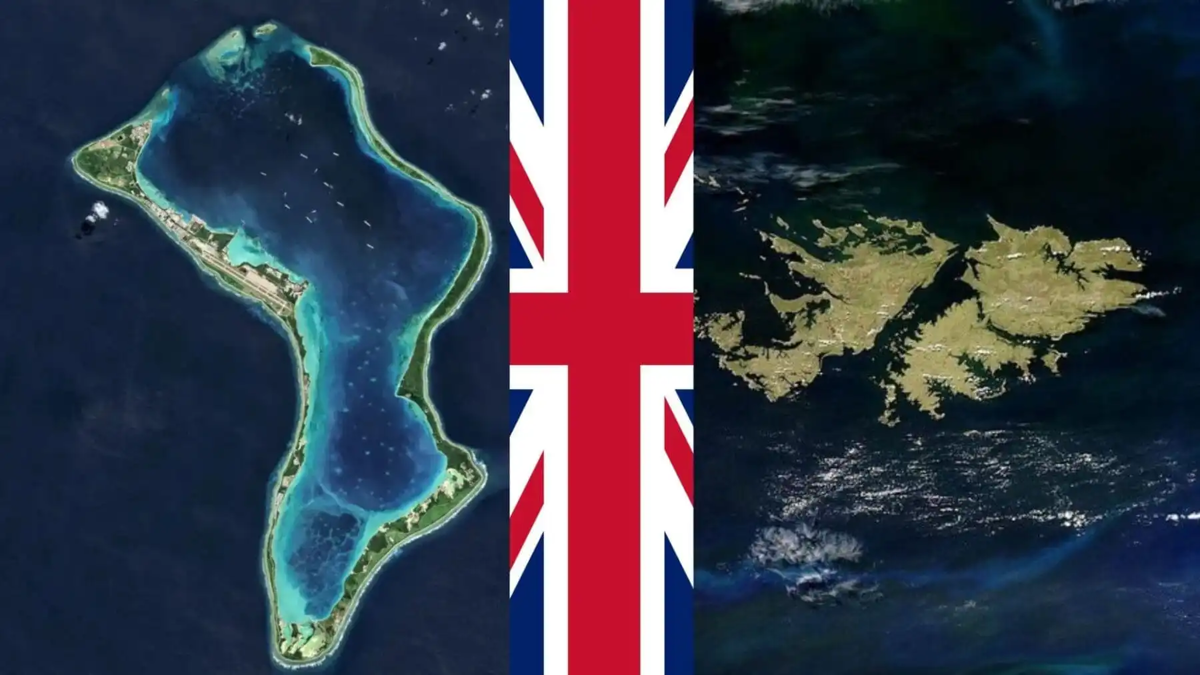
Buenos Aires, January 24, 2026 - Total News Agency (TNA) - The direct intervention of U.S. President Donald Trump to block or delay the return of sovereignty over the Chagos Archipelago to the Republic of Mauritius introduces a geopolitical shift that not only reconfigures the colonial debate in the Indian Ocean but also indirectly harms Argentina's position in its historic claim over the Malvinas Islands. Experience shows that without sustained and coherent international pressure, even the most solid legal advances can be neutralized by the geopolitics of great powers. Sources consulted: journalistic reports from London and Washington, resolutions of the UN General Assembly, advisory opinion of the International Court of Justice on Chagos, legal-diplomatic analyses on decolonization and Argentina's claim over the Malvinas. The United Kingdom had agreed to negotiate with Mauritius to avoid a prolonged and costly legal battle, after the UN General Assembly declared the separation of Chagos illegal and the International Court of Justice ruled in 2019 that London must end its administration of the territory. This legal framework had generated a positive effect for Argentina. Furthermore, the Chagos process weakened the British argument of self-determination, prioritizing the territorial integrity of the decolonized state over the will of a displaced or implanted population. Trump's emergence altered that balance. While the U.S. usually presents itself as a defender of the rules-based international order, its rejection of the return of Chagos reinforces a selective reading of international law, legitimizing accomplished facts when they serve geopolitical interests. Washington's pressure on London weakens a precedent that, until now, strengthened Argentina's thesis in international forums. British Prime Minister Keir Starmer decided to suspend the legislative processing of the agreement reached in October 2024 with Mauritius, after Trump called the restitution of Chagos “a very stupid act.” For Argentina's claim, this setback implies a political cost: it erodes the narrative that London can be forced to negotiate when diplomatic weight outweighs strategic benefit. Moreover, Trump's stance introduces a contradiction that works against Argentina. The U.S. objection relies on the validity of a 1966 bilateral treaty recognizing British sovereignty over the archipelago and guaranteeing its use for joint defense purposes. American pressure introduces a regressive factor in a process that had been interpreted as a victory for the principle of territorial integrity over the legacies of colonialism. By conditioning British policy and reinstating military-strategic logic as the dominant criterion, Washington reinforces the idea that the security interests of great powers can prevail over the principles of decolonization and international law. The UN resolutions and the advisory opinion of the International Court of Justice remain in force and continue to support the principle of territorial integrity. The Chagos case was consolidating as a political and legal mirror of the claim over the Malvinas: in both scenarios, the United Kingdom consolidated its control through unilateral acts, implanted a population, and maintained its position for decades despite lacking legitimate sovereignty at the time of occupation. The understanding provided for the formal transfer of sovereignty to Mauritius, along with a 99-year lease scheme that would allow the UK and the US to maintain the strategic military base of Diego Garcia. That logic is the same that has historically protected the British position in the Malvinas. Nevertheless, the Chagos case does not entirely lose its value.